


A. Introduction
It is now casting a new shadow in cities already threatened by atmospheric pollution affecting public health — the increase in greenhouse gases to levels whose net impact, with the rise of transportation, is becoming a serious problem. The risk of this growing hazard highlights the need for urgent containment by adapting transport plans, especially in cities to mitigate adverse environmental and health effects.
As we look forward to 2027, the concept of sustainable transportation is poised to transform the way we travel about our cities and connect with one another.Sustainable Mobility includes a number of modalities — electric vehicles, public transit, cycling and walkability — all designed to cut CO2 releases and enhance urban livability.
B. Increasingly Worries Over Transport-Related Greenhouse Gas Emissions
The Importance of Sustainable Transportation
Information about Sustainable Transportation -Why it is important and what strategies are adopted for sustainable transportation … Sustainable transportation is seen as key to the future of transport since these transports reduce damaging, CO2 emissions. It also goes on to play an important role in the development of smart cities, leading to more integrated urban planning and mobility solutions beyond environmental benefits.
Compensating for Social Exclusion and Service Shortage
Beyond generating increased mobility, sustainable transportation is actually very critical to the fight towards end the social isolation of disadvantaged communities. Addressing the first-last mile problem, will ensure that access to transport is open to everyone especially in the most undeveloped areas thus meeting vital gaps in present services.
Health, Air Quality and the Opportunity for Cleaner Mobility
Widescale improvements to air quality and citizen health are predicted from the widespread adoption of sustainable transportation. It shall facilitate the faster transition of more green and environmental-friendly mobility in cities, complementing with existing and upcoming sustainability targets.
Future Trends in Sustainable Transportation
In the future, sustainable transport is bound to grow. Two undeniable trends and technological advances impacting the future of urban mobility will help cities achieve their sustainability targets, as well as citizens around the world have a better quality of life.
C. Decarbonization Each Ongoing Transportation toward Sustainability
Significant forms of decarbonization are already underway across the global economy and those initiatives should continue to grow. The current strategy identifies the need to switch both to lower-carbon fuels and higher vehicle efficiencies as well system and operational improvements across the transport sector. These also seek to reduce the carbon footprint of this sector and improve sustainability.
Emerging Trends in Sustainable Transportation
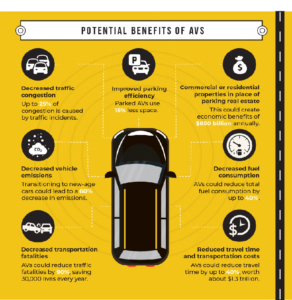
Key trends include trends for accelerating EV/AV adoption and sharing with these high-technology vehicles becoming more part of the urban mobility fabric. Greater emphasis on policies that promote compact development and congestion pricing are also more widely adopted in communities with severe traffic. These systems encouraged sustainable means of travel such as car-sharing, biking, walking and mass transport — making urban movement greener than it was before.
Autonomous vehicles and the Future of sustainable Transportation
Experts anticipate that AVs will make our travel even more efficient and sustainable in the future. They may have the potential to revolutionize urban transportation due to their ability to achieve faster speeds, reduce fuel lossand minimize congestion through the use of artificial intelligence and another contemporaneous technology. Moreover, drones and self-driving delivery vehicles are also sure to transform urban deliveries by applying AI for efficient traffic management, fuel conservation, and resource maximization.
High-speed rail and future transportation tech
New travel methods like high-speed rail and magnetic levitation technology, for example, are poised to break ground transportation speed records. These technologies not only provide faster transit times, but also can leverage zero-emission sources of electricity to help decarbonize the transportation sector.
Zero Emission Fuel Alternatives
Because the majority of transport emissions are created when fuel is combusted, the mass adoption of alternative fuels could in theory reduce emissions to zero. These include ethanol, natural gas, biofuels, hydrogen, and electricity. But their environmental benefits rely heavily on being generated from non-carbon sources.
How Electricity Reduces Emissions
Electricity is an ideal alternative fuel for fuelling most line-haul road vehicles. Pair electricity with decarbonizing the power sector, and you can see jaw-dropping emissions reductions. In particular, EVs are a means to facilitate decarbonization by providing mobile power storage that can be used as balancing for more variable renewables such as wind and solar. But high battery prices and a lack of charging infrastructure still pose barriers to complete electrification.
Scaling Up Non-Petroleum-Based Fuels
Alternative fuels such as natural gas, biofuels, hydrogen and electricity are not without environmental impact in their generation; a careful management must be undertaken to ensure that the alternative options do not result in increased emissions. Moreover, scaling up these fuels entails developing the necessary infrastructure to enable their use at scale, which is essential for the success of decarbonisation of transport in the longer term.
D. Advancing Sustainable Transportation
One increasingly basic way to make cities more sustainable is simply by using electrified transit. And we are learning more about why that is valuable for air quality, emissions and noise. Trains, buses and smaller vehicles such as cars and trucks already have this technology.
One of the major challenges for cities going ahead with this is to make sure that regional electrical grids can meet the abrupt uptick in power demand. Exciting financing for the deployment of charging infrastructure and refueling facilities will be vital to fill existing gaps, especially in rural areas and long-distance travel.
High-speed trains

High-speed rail is frequently promoted as the #1 biggest climate solution — one which can decarbonize almost the entirety of the transportation sector and do so at a relatively rapid pace. This includes replacing most domestic flying, up to 50% of car trips, and existing e-commerce distribution networks that are predicated on energy-wasting long-haul land trucks and planes. More so (and on a side note), an electrically driven, high-speed train can run 100% safety on clean renewable energy. One high-speed rail on wind power electricity is estimated to move nine times as many passengers as a similar aircraft.
Hydrogen Automobiles
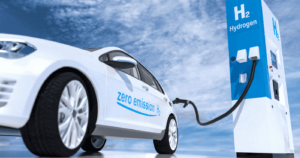
Hydrogen buses are almost zero-loss, and even more efficient than traditional internal combustion engines so that less fuel is needed to travel the same distance. These eco-friendly buses are essentially powered by batteries that allow hydrogen to react with oxygen to produce power. Because they produce only water vapor as an exhaust, hydrogen vehicles have no harmful emissions and therefore represent a perfect zero-emission alternative for public transportation.
They have an extensive range, which is now was up to 350-miles, which matches the distance and performance characteristics making them suitable as a one-to-one vehicle replacement to be used in place of conventional fuels, whilst not affecting any existing route planning or operations in any way. Then, basically anywhere you can pump hydrogen on site for the buses or fill it there, fuel cell busses could be filled up in 7-10 minutes flat.
Bus Rapid Transit (BRT)
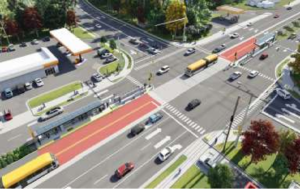
Bus Rapid Transit (BRT) is a high-quality bus transit system that delivers metro-level capacities and rapid, comfortable, and affordable services to the public. It achieved this in part by building dedicated bus lanes (which are often located in well-trafficked public settings that practically invite people to hop on and off). They are mostly battery-electric buses or hybrids and some of them have been operating in different parts of the World, particularly in densely populated countries.
BRT enjoys international trade praise as arguably one of the least costly ways to deliver top class public transportation services in metropolitan areas with amazing success stories regarding reducing urban congestion and air pollution.
New Manoevered Solutions of Sustainable Transportation
Shared mobility options can be integrated into existing networks and public transport that creates a first- and last-mile solution, filling gaps in services as well as extending areas serviced, which has been positioned as one of the major challenges particularly faced by rural locations. We will use digital technology for automated mobility and traffic control systems that can provide efficiency to transit authorities as well as green the transport services.
E. Enhancing Customer Experience
Smart apps & Mobility as a Service will be key in providing residents with more options, customer experience and bringing more people to mass transit and other greener alternatives than cars. That inflection point before us will require a suite of actions to address longer-term air quality, pollution, congestion and noise in urban centres, focused on strengthening mass transit and encouraging more active transport modes including walking and cycling.
The Rise of Shared Mobility
Fargettable since several decades, we have witness the rise in numbers of shared mobility. Common practice is the basic ones like bicycle, skates and skateboarding, but it has now expanded to new ways of transport like electric scooter, hooverboard segway or even electrical bicycle. These emerging transportation modes are usually environmentally friendly and have great potential to increase public transport use.
Electric Bikes and Their Impact
And especially electric bikes are rapidly climbing the popularity rankings in cities to rival cars for short- and medium-distance journeys, thereby reducing CO2 emissions. Just a 5% shift from Cyclists to Pedestrian journeys using mobility option of electrically powering bicycles or similar forms of transport could reduce by 7%, it means that we recommended removing 134 million cars appropriate for the year 2030.
Challenges with Electric Scooters
Electric scooters generate less CO2 than vehicles, but more than public transport. They are fine for occasional car trips but are generally only used by one person and do not have a long lifespan between 1.5–3 years. Then there are concerns about the sustainability of rentals overall and the issue of maintenance and vandalism.
F. Other Sustainable Vehicles
As part of making a transition to sustainable future mobility in cities, the combustion engine must be replaced by fuel-efficient vehicles which are cleaner than conventional cars offering effective solutions for providing urban areas with cleaner air. Compared to older kinds of cars, fuel-efficient vehicles use less gas to operate. The residents will be able to reduce their fuel expenses while also being desperate from the unstable gas prices. Fewer greenhouses gasses would also be released into the atmosphere.
All-Electric Vehicles
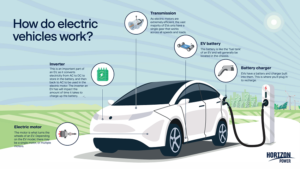
All-electric vehicle
EVs (All-Electric vehicles): Fully electric vehicles powered entirely by electricity. They are driven by one or a number of electric motors which are powered via rechargeable battery packs. One of the benefits that EVs offer over traditional vehicles is their superior overall energy efficiency. This is the electricity derived from the gird and then put in to those wheels that an EV can transform 77+% of it into movement. Conventional gasoline vehicles, however, are able to extract just 12 percent–30 percent of the energy contained in gasoline.
In terms of performance, EVs are quieter than conventional vehicles – electric motors provide smoother driver experiences and far superior acceleration with significantly reduced maintenance needs vs internal combustion engines (ICE). EVs of tomorrow are believed to bring down noise and air pollution in cities, and a more general reliance on foreign fuels (you can make power here).
Hybrid Electric Vehicles
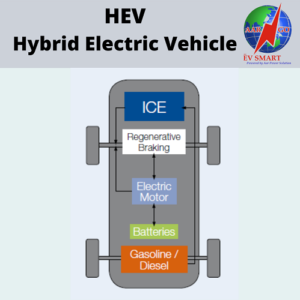
A Hybrid Electric Vehicle (HEV) is powered by an internal combustion engine as well as one or more electric motors that use energy stored in batteries. They include the advantages that gasoline engines have together with those of electric motors and can be optimized to achieve specific targets — corresponding to enhanced fuel economy or extra power, for example.
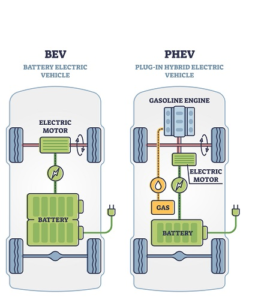
This paper is discussing Plug-in hybrids (also known as Plug-in Hybrid-Electric Vehicles, or PHEVs), which are hybrids with large batteries. Such vehicles are charged at home by plugging in an electrical outlet or charging station. They can also hold enough juice to really reduce their reliance on petroleum in normal driving.
Plug-in hybrids of course come in a few varieties like the Extended Range Electric Vehicles (EREVs) which run entirely on electricity until the battery runs out, at which point the gasoline engine produces electricity to power the electric motor. These vehicles won’t require feul, much less fuel for short journeys. According to some reports plug-in hybrids are consuming about 30% to 60% less petroleum compared to regular conventional vehicles.
Additionally, because the electricity that runs them is mostly produced domestically, plug-in hybrids also reduce oil dependency. Until now, between $4 to $8 thousand higher in the initial price over a non-plug-in hybrid and expected future savings essentially relying on electricity being cheaper than gas. Any qualifying plug-ins have access to up to $7,500 in currently available Federal tax incentives.
G. Infrastructure Development for Electric Vehicle Charging
Public Charging niso respectively, Executive Orders and the Vital Role of Public Charging
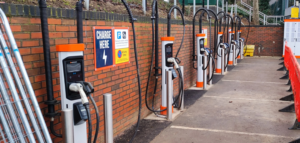
Current trends in charging infrastructure remain geared toward EV users looking to charge at home; however, as the urgency for greater accessibility has become a popular topic of conversation among state and local government leaders, an expanded network of public charging stations will prove essential to ensure that all regions have the charge necessary to make this transition convenient and accessible. It should also be noted that since EV consumers and businesses need charging stations to plug in, both of these groups — all-electric vehicles or PHEVs also identified by various names as BEVs (battery electric vehicles) — all require access to the power grid. That access should involve options to charge cars at home and throughout cities in various charging facilities.
Enhancing Charging Options
To encourage more people to drive EVs, it will be essential to install dedicated charging at workplaces and other public areas. We anticipate that this approach will increase the rate of market adoption by offering greater flexibility to users through charging in places and times that best suit them, thus encouraging more drivers to switch to electric vehicles.
Tools for Infrastructure Planning
Public authorities have access to instruments such as the EVI-Pro Lite tool, which help establish the amount and types of charging infrastructure needed for state-, city- and urban-specific levels of EV uptake. It will also assess how the demand for electricity may be affected by EV charging.
Building a Robust Charging Network
Charging stations will need to be well established for consumers and fleets as the number of EVs continues to increase. One such resource is the Alternative Fueling Station Locator, which lets EV users search for and find a variety of public and private charging stations.
Standardization in Charging Infrastructure
A common standard has been laid down in the industry to ensure a consistent charging infrastructure. Open Charge Point Interface: OCPI gives requirements to chargepoints, so they can be definitively interoperable and user prefactable.
H. The future of sustainable fuels
Diverse Range of Alternatives
The future of sustainable travel will depend on a mix of solutions like electricity, hydrogen and renewable fuels. The main driver for change is the close-down of transport-associated emissions, and everyone appears to intend that how all feasible choices needs to be integrated.
The Rise of Renewable Fuels
Renewable fuels are derived from renewable resources instead of fossil fuels, and have gained popularity due to their sustainability and potential for substantially reducing GHG emissions. This meant that in 2020 alone, more than 239 million liters of biofuels were used to displace over 209 million liters of fossil fuels and avoid the emission of more than 520 ktCO2eq.
Clean Fuel and Technology Integration
Well, most sustainable transportation options depend on clean fuel and battery or a combination of both. Alternative fuels can be used in flexible-fuel and dual-fuel vehicles as well as advanced technology vehicles such as hybrids and fuel cells. These fuels also lead to fuel savings, better air quality and further savings.
Examples of Alternative Fuels
A few of the most important examples is biodiesel, which is more like petroleum diesel and can be processed domestically on homegrown fuels. Electric Vehicles use electricity to power themselves (such as Battery-Electric Vehicles, or BEVs, and plug-in hybrid electric vehicles or PHEVs). On-board batteries can be recharged via grid participation and other external electrical power sources.
Hybrid and Plug-In Technologies
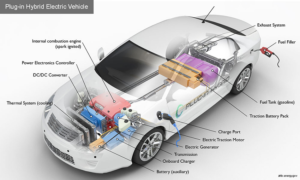
Hybrid electric vehicles (HEVs) use liquid fuels, such as gasoline and small batteries storing energy from regenerative braking. PHEVs give you the option, when available, to get your power off-board using electricity, but they can still run on liquid fuels and switch back to operate as HEVs as needed.
Ethanol and green Hydrogen
Renewable plant sourced resources are expected to be absorbed into the future ethanol with high absorption, used in gasoline blends as it has a history of being used today. On the other hand, green hydrogen will have an important function in the transition to greener energy for transport during peak power demand periods.
Upcoming Natural Gas, Plus Propane Inner Surface
It will be generated completely renewably and convert it into a clean-burning alternative fuel source for natural gas. Propane is poise to play a key role in the sustainable fuel landscape of tomorrow, but it also releases carbon dioxide albeit more than traditional fossil fuels.
I. Developments In Vehicle Batteries
Electric cars and battery recycling present enormous opportunities to create a truly sustainable future. City dwellers could do home installations in their garages and choosing renewable energy sources. The evolution of battery technology has been instrumental in the degree of versatility and wide acceptance of electric cars, especially since breakthroughs in technology have significantly improved range, overall performance as well as reliability for a previously hobbled class compared to gasoline-powered vehicles.
Lithium-ion batteries
Currently, Lithium-ion batteries are the most commonly used battery type for electric automobiles. They offer many benefits over other battery types such as higher energy density, longer cycle life and lower self-discharge. Additionally, the batteries themselves are compact and relatively light making them ideal to be used for electric cars. On the downside, lithium-ion batteries are fairly expensive to manufacture, pose serious safety risks, and offer relatively few recycling options.
Solid-state batteries
The article Solid-state batteries with a lot more advantages over lithium-ion batteries is one of the interesting new technologies. They use a solid electrolyte instead of a liquid one, which could increase energy density, reduce the risk of fire and extend battery life. Furthermore, solid-state batteries are expected to be charge faster and be more environmentally friendly than standard lithium-ion batteries. Aside from these performance milestones, the biggest hurdle remains that solid-state batteries are still under development and not currently ready for use in electric vehicles just yet.
J. How battery disposal and recycling are important
Increasing Demand for Efficient Battery Recycling
With the rise in popularity of electric cars, this will only become important as batteries need to be disposed off or processed efficiently. Battery recycling is an essential link in the chain from future transport and helps to conserve resources with precious elements.
High-Value Resources in the Electric Car Directive
Electric car battery packs consist mainly of lithium, cobalt, nickel and other metals that are suitable for reuse as well as the materials destined for repurposing. There are ways to recycle this battery and recover these materials, which will reduce the need for further mining activity that is harmful to the environment.
K. Conclusion
Progress Toward Sustainable Transportation
Increasing awareness and Eco-Friendly Choices
Although global sustainable transportation is far off in the future, cities are moving much closer to greener transit options. As people become more aware of health and environmental impacts caused by transport, they are increasingly turning to greener options, along with leaving cars at home more often.
Innovations and New Opportunities
With new modes of transportation and possibilities, we can witness lots of innovations in the transport industry. The combination of new and emerging technologies will help us reduce the sustainability gap.
Transformative vision
Sustainable transportation is a vision for the future where travel is efficient, equitable and environmentally responsible. This would involve a multifaceted approach, incorporating a range of mobility options globally, from e-mobility to public transport and bicycle-walking. Emphasising accessibility, offering workable travel solutions to anyone in any location with no regards to their wealth level.
Successful sustainable mobility depends on new technologies, resilient infrastructure, and respect for recycling and material savings. Communities can dramatically shrink carbon footprints and improve air quality by focusing on renewable energy sources, advancing shared mobility, and providing the right infrastructure.
In the end, sustainable transport is more than simply about reducing emissions; it’s about building stronger communities, ensuring social justice and protecting the planet for future generations. With growing awareness and increasing demand for greener alternatives, we can change the way we travel and connect with others while creating a more sustainable world. Realizing this vision requires the cooperation of governments, corporations and individuals alike, but the prize—cleaner air, better lives and a healthy planet—is worth it.
Green Moves ( Courtesy: Biotech Whisperer)