
Introduction
The worldwide e-waste production exceeds 53 million metric tons per year and experts predict it will reach 74 million metric tons by 2030. This waste produces an equivalent weight to that of 350 cruise ships.
The environmental contamination and harm to human health along with essential resource waste occurs because formal waste recycling handles only 17.4% of this waste stream while 82.6% remains unrecycled.
A “toxic flood of electric and electronic waste” that is growing by the day across the world, should be urgently converted into a source of decent work, that can also protect populations from its harmful effects, the United Nations labour agency said.
Define E-waste
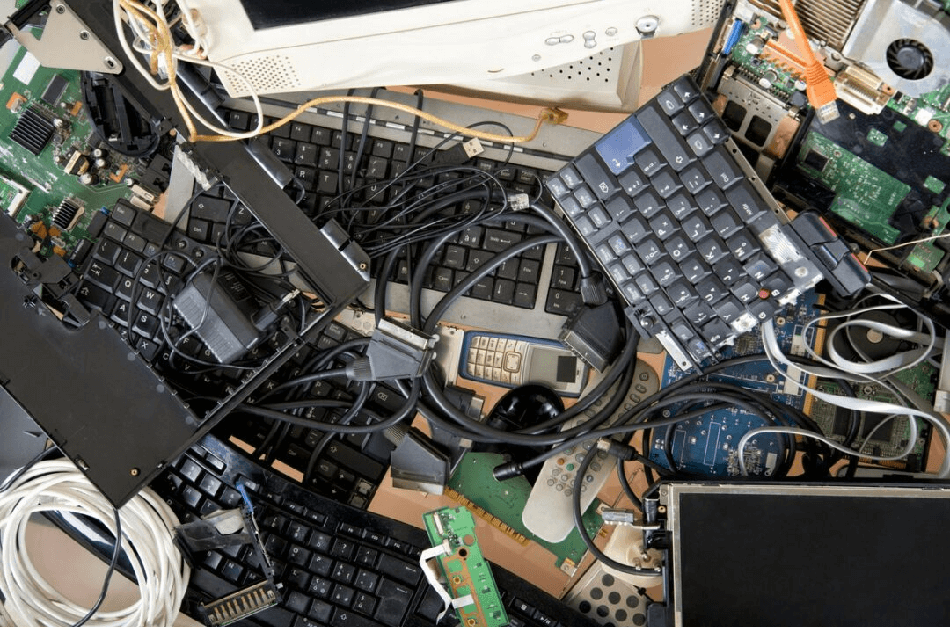
E-waste includes discarded electronic or electrical devices together with cellular phones and laptops as well as televisions and refrigerators and additional industrial equipment. Electronic waste materials contain dangerous substances along with useful metal components which include lead, mercury and cadmium in addition to gold silver and rare earth elements.
The issues associated with e-waste need understanding.
The present method of throwing away e-waste produces severe adverse effects to environment, health conditions and financial resources. The toxic chemicals present in e-waste enter soil and water which results in contamination affecting both ecosystems and food chain organisms.
Workers who engage in hazardous informal methods of waste recycling face severe health risks because of their exposure to unsafe chemicals. Because to the existing absence of recycling initiatives, the economic worth of recoverable materials within e-waste amounts to billions of dollars yearly. The technocrates have to address e-waste in its various aspects like how to reduce, treat, and dispose it to achieve proper e-waste management.
II. How to reduce e-waste?
Here are some measures to help reduce e-waste:
Consume less: Buy only what you need and choose energy efficient products.
Check Product Lifespan: Consider the product longevity before purchasing electronics6.
Maintain and Repair: Extend the lifespan of your devices through proper maintenance and repair. Repair your old product, if possible, Regularly check devices for deficiencies to catch issues before they become worse.
Repurpose Old Devices: Instead of merely tossing old devices, see if you can repurpose that for another use case or find someone who can use it. Get some outdoor time — and use your old mobile phone for something new Use it as a sat nav in the car, or a music player at home.
Donate Electronics: Give old electricals to charity shops, family, friends or local community causes.
Sell working electronics: If your device is still in working order, sell it to someone who can use it1. selling second-hand electronics here — Facebook Marketplace, Gumtree and eBay.
Recycling Right: When it’s time to throw out an electronic, ensure that it’s recycled in the right way.
Invest in Energy-saving Devices: Refer to the energy rating and go for resource-efficient electrical devices as these should also consume lesser energy therefore lasting longer and helping you save. Buy Energy Star-certified appliances.
Organize Electronics: Keeping track of our electronics can minimize e-waste, as it will help us know that everything is where it needs to be and easy to access.
Avoid Hoarding: Avoid hoarding electronics.
III. How can organizations minimize e-waste within their business operations?
Companies can decrease their operations’ e-waste in a number of ways:
Train Staff: Implement a training program teaching about the right and safe handling of electronic devices. Educate them on the environmental and financial impact of e-waste to promote a practice of reduction.
Electronic equipment: If you only need electronic equipment on a short-term basis, consider hiring rather than purchasing to reduce the waste generation.
Staff: Donate e-waste to community causes and charities, and sell old телефоны staff к вызывает ему e.g нет позиции человека или по системе первая сделка.
Protect Electronics: Use cases, screen protectors, and surge protectors to prevent physical damage and electrical surges. Store appropriately to avoid overheating or damage and switch off electronic devices at night to extend their lifespans.
Buy for the Future: Look for long-lasting energy efficient options that reduce the need for upgrades.
Waste-Cutting Policies: Business managers are required to develop waste-cutting policies, and be willing to try on ideas that can lead to sustainability.
Create Internal Efficient E- Waste Collection Systems. Establish dedicated collecting points within your organization and make them easily accessible
Recycling of plastic waste is essential due to the environmental hazards posed by plastic pollution.
Repair and Improve Equipment: Rather than continually replacing equipment, repair or improve equipment to extend its life.
Responsible Supply Chain4: Work directly with suppliers to promote responsible sourcing of electronic components and materials.
Set Reduction Targets4: Define specific, measurable, and time-bound targets for reducing e-waste crisis.
Consumer Education4: Inform consumers about the importance of proper disposal
Manage E-Waste recycling Centers: Run recycling centers to guarantee the proper disposal of used electronics.
IV. How is E-waste recycling done?
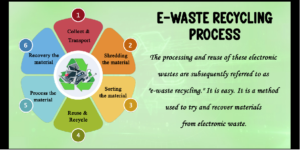
The processing of e-waste generally includes several stages of handling both to ensure safe disposal and recover recoverable materials from obsolete devices. It typically involves the following process:
Collection: E-waste is collected via specific recycling bins, drop-off centers, or take-back schemes operated by local authorities, businesses, or community events. Genuine separation at collection points, apart from it must have mentioned separate bins for batteries, phones, computers. Some services allow for on-demand pickups.
Storage: The e-waste we collect is safely stored until processed, especially for lead-rich items such as old TVs and monitors.
Sorting, Dismantling and Shredding: E-waste is manually sorted to remove anything that requires special processing, like batteries and lightbulbs. Components prone to reuse or metals of value are separated. The leftover is pulverized into tiny particles that are designed to facilitate material segregation.
Material Separation: Using magnets for ferrous metals (iron and steel) and eddy currents for non-ferrous metals They separate different types of plastic and purify their waste using water separation, with manual sorting to remove contaminants.
Recover: Recycling processes are designed to recover valuable metals, including copper, lithium, silver, gold, and aluminum.
More Our process of recycling of e-waste in Detail for Certain Items:
Batteries: Batteries are separated by type; plastic components are burned and toxic gases are captured by a scrubber. Other metal parts are crushed and melted, then sorted by weight.
Cathode Ray Tubes (CRTs): CRTs that were used in older televisions and computer monitors contain lead, making the careless handling of broken CRTs dangerous. The glass is highly contaminated with lead and requires special treatment.
Computers and laptops: In recycling, computers are sorted and different parts are separated; data destruction is a key component in the shredding or physical destruction of hard drives to ensure sensitive data is deleted digitally.
Mobile Phones and Tablets: Disassembly sorts components such as screens, batteries, circuit boards, and casings. Over the past decade, lithium-Ion batteries have been extracted and recycled to avoid risk of fires. Circuit boards are shredded and the gold and silver inside them are extracted, casings are melted down for reuse.
Other Methods:
Acid Bath: Electronics are soaked in acids to separate metals, which are recycled3. But the corrosive acid waste must be disposed of with care.
Incineration: This involves burning waste at very high temperatures, which significantly cuts down the volume of waste and creates energy, but produces toxic gases.
V. Alternative Disposal Methods:
Donation: Giving still-working or reparable devices to schools, nonprofits or developing countries.
Selling: Putting up electronics for sale on social media or online stores
Manufacturer Buy-Back: See if the manufacturer offers a program to turn in old devices for cash or credit.
VI. What global e-waste management practices are most effective?
The strategies that have shown great outcomes globally include a combination of regulatory frameworks, technological innovations, community involvement, and sustainable practices. Here are some key strategies:
Extended Producer Responsibility (EPR) — manufacturers take responsibility for the entire lifecycle of their products, including take-back, recycling, and final disposal. EPR motivates firms to create products with eco-friendly features and to create sustainable recycling strategies, greatly reducing the amount of e-waste created.
Adopting a Circular Economy: A circular economy is essential. This means designing products not only for longevity, reusability and recyclability, but also to use the least amount of resources and generate the least amount of waste possible. Promoting sustainability in manufacturing and consumption can pave the way for a Closed Loop system where products are reused and recycled instead of landfilled.
Public Awareness Raising: They are crucial for proper management of hazardous materials e-waste because many consumers do not know the environmental effects. Public education initiatives can educate citizens on responsible disposal methods and the value of recycling. Connecting with communities helps enable effective reverse supply chains and encourages sustainable consumption practices.
Integrated E-Waste Management Systems: A study suggests developing integrated systems that facilitate the dual management of municipal solid waste as well as e-waste in a location-specific manner, especially for developing countries with scattered management of municipal solid waste and inadequate practices for its disposal. This method is based on using widely available waste fractions and treatment technologies to enhance local environments and public health.
Cutting-edge Retrieval Technologies: The second category includes the use of cutting-edge retrieval technologies (e.g., the use of pyrometallurgical and hydrometallurgical processes) to maximize the recovery of valuable materials from the e-waste streams. These technologies enhance the efficiency of extracting precious elements such as gold, silver, and copper and minimize environmental pollution in the process.
Inter-Sector Cooperation: The coordination among government, private, NGO and community stakeholders aid in the efficient management of e-waste. Working together can create great recyclers and share common tools to achieve better recycling.
Regulatory Enforcement: There should be stringent regulations for electronic waste disposal. Countries such as Switzerland have already set the bar, with laws that require safe handling and recycling processes. This type of regulation is to make certain that e-waste is handled in an environmentally friendly way.
Management system: Regular monitoring and evaluation of e-waste policies allow for the identification of improvement points. Introducing feedback mechanisms can serve to strengthen the impact of existing approaches as well as respond to the evolving context.
Through these approaches, nations are able to reduce the environmental and health hazards of e-waste, while encouraging sustainable practices for electronics worldwide.
VII. Which are the latest technologies in e-waste treatment?
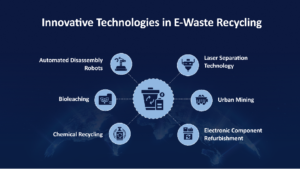
To tackle the increasing challenges of e-waste, new technology for its treatment is a must. Here are some of the most significant developments:
With You till October 2023 You can think about machines that are Artificial intelligence triggered — AI-Powered Sorting Systems. AI has the potential to improve the accuracy and efficiency of recycling significantly by analyzing materials like metals, plastics, and circuit boards, allowing for the immediate categorization of these materials, which can lead to reduced labor costs and fewer errors in recycling operations.
Robotic Recycling: The robotic systems automate processes that were previously done mechanically, such as dismantling, sorting, and separating components from e-waste This technology enhances efficiency while reducing human exposure to hazardous materials, contributing to worker safety during the recycling process.
Biometallurgy: This cutting-edge technology utilizes microorganisms, including bacteria and fungi, to extract precious metals from e-waste via methods like bioleaching or biosorption. Biometallurgy has the potential to be a more environmentally friendly alternative to traditional methods and, in some cases, it can achieve greater recovery rates while having a smaller ecological footprint.
Chemical Recycling: Different chemical recycling methods decompose e-waste materials into their respective chemical constituents. Pyrolysis involves breaking down plastics without oxygen, while solvolysis uses solvents to separate polymers. These processes allow4 for the recovery of valuable resources from mechanically-recycling-inhospitable46 heterogeneous electronic componentry.
Plasma Arc Recycling: This advanced technology utilizes plasma torches to raise the temperature of e-waste to such a degree that they are broken down into their base elements. This high-temperature plasma arc recycling enables the treatment and recovery of valuable materials with little to no environmental impact.
Urban Mining: This practice involves recovering valuable materials from discarded electronic instruments within urban areas. Urban mining techniques can include advanced material recovery methods such as hydrometallurgy and bioleaching, which enhance resource recovery rates while reducing the need for traditional mining.
Laser Sorting Technology: By employing high-precision lasers to detect and segregate varying materials present in e-waste, laser sorting technology presents recyclers with the capacity to combat particular types of materials. The selective absorption of different materials and their subsequent response to laser wavelengths and intensity allow for high accuracy in material separation, leading to reduction in contamination and better recovery quality.
Focus on e-waste treatment:” is an area where new technologies can help. It enables industries to deal with the challenges of rising e-waste production as well as encourages a circular economy.
VIII. What can tech companies do about e-waste?
There are many ways tech companies can champion sustainable e-waste practices:
Work with Recyclers and NGOs: Partner with recyclers and NGOs to ensure e-waste is disposed of responsibly These collaborations can aid in the recycling process and increase awareness of mitigating e-waste and plastic pollution.
Create new recycling technologies: Push the envelope on recycling to be able to recover valuable materials, such as rare metals, from old electronics. Companies are looking for way to shed and re-use these metals, ensuring they aren’t wasted in landfills.
Introduce circular economy initiatives: a focus on products designed to be more easily repaired/recycled.
Designing for durability and longevity: Promote a ‘buy less, use longer’ mindset in consumers and promote sustainable, durable, repairable electronic gadgets. Manufacturers need to work towards eco-design: producing products that are more easily disassembled, repaired, and upgraded to prolong their lifespans.
Implement take-back programs: Create programs where consumers can return old electronics for proper recycling. These are provided by many manufacturers and retailers as part of their corporate social responsibility policy.
Get help from innovative ideas to reduce e-waste: Get services that use advanced sorting technologies, chemical recycling techniques, and sustainable management practices. Implement data security management best practices to prevent data security issues during the recycling process to enhance e-waste management strategy.
Embrace a circular economy model: This model allows companies to limit e-waste in a number of ways beyond recycling.
Invest in Sustainable IT Solutions: Recycle/reuse devices; use cloud-based solutions7.
Buy used hardware: To extend the life of IT assets4 and to cut down the amount of e-waste that makes it to landfills, purchase used hardware
Set a good example in sustainable e-waste management: The government can also advocate for responsible disposal and recycling of e-waste regulations and policies that promote sustainable e-waste management practices. Public awareness campaigns also help raise people’s awareness of the importance of recycling of waste and adopting new technologies.
Inter-industry Collaboration: Significant collaborations centered on the collection of e-waste, especially in developing nations where the infrastructure is often insufficient to manage the rising tide of consumption of discarded electronics This could be achieved through the designs of the programs to consolidate e-waste pick-up, thus alleviating pressure on local environments and at the same time contributing to a more sustainable global supply chain.
IX. What is the right way to properly dispose of e-waste for consumers?
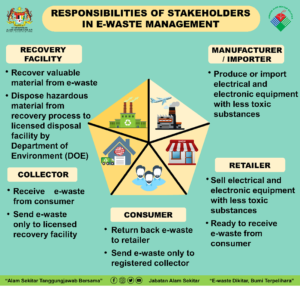
There are several ways for consumers to recycle e-waste:
Recycling: When e-waste is properly recycled, electronic devices are dismantled into their component parts, and their materials are recycled or repurposed6.
This is the least favorable option to dispose of the e-waste is recycling and its best for all types of trash, as well as e-waste, and is perhaps the simplest way to dispose of e-waste as most communities have implemented e-waste collection programs and recycling. Ask about those programs before you drop that old electronic device into the trash.
Collection Programs: Used electronics are collected through designated recycling bins, drop-off centers, or take-back programs These collection points are generally run by local governments, businesses, or community events.
Safe Storage: Collected e-waste is kept in proper storage until its processing is due.
Sorting, Dismantling and Shredding: The e-waste is manually sorted so that certain fragments that require special treatment, like batteries or lightbulbs. At this point, some components — such as reusable ones, or valuable metals — are separated. Once sorted, the remaining e-waste is shredded into minuscule chunks.
Donate: Schools, nonprofits, and triggered developing countries are interested in working electronic devices or looking for little repair Some charitable organisations already have e-device redistribution schemes, and many also provide free collection.
Sell It: Make a for-sale announcement on social media, auction sites, or an online store. You’ll receive cash back, someone else will receive a great deal, and everyone keeps the “trash” out of landfills.
Manufacturer buy-back or take-back: Contact the device’s manufacturer. They probably have a scheme where they take your old device off you and give you money or a discount on a new appliance.
Drop off at a specific facility that specializes in the disposal of E-Waste: For businesses that produce a relatively small amount of e-waste, the most practical option for effective e-waste disposal is likely to take it to your local facility4 that can dispose of e-waste in a safe and reliable manner.
X. When it comes to e-waste, what are the responsibilities of governments?
There are several actions that governments must take in order to effectively manage e-waste:
Regulating Environmentally Sound Practices: Government policies that enforce environmentally sound practices for e-waste collection and recycling. It includes standard setting and requiring the establishment of electronic waste management centres.
Financing Sustainable Technologies: Governments finance sustainable technologies through authorized dismantlers and recyclers. Thus assisting all the stakeholders in the proper, eco-friendly and safe electronic waste management.
Control of e-Waste in the Informal Sector: Governments work to control and reduce e-waste handling and recycling by the informal sector. Registrations and licenses for collection centers and recyclers, followed by regulated e-waste collection.
Public Awareness: Governments promote and support public awareness, education and outreach campaigns to inform the public about the environmental and health impacts of e-waste. Informing consumers with the correct recycling method of these materials fosters responsible consumer behavior.
Introducing Incentives: Many products on the market do not have features that would allow for a long lifecycle, encouraging ideally all manufacturers to create eco-friendly products designed for the long-haul.
Public-Private Partnership for Economic Sustainability: Setting up a reverse supply chain incurs a financial burden which needs to be shared by government organisations and private players. This requires the amalgamation of devices from the users, wiping off private data, and diverting them for processing and recycling further.
Collecting Mechanisms: Encouraging buy-back and take-back systems will help e-waste keeping under control in an effective manner. E-Waste ATMs in public spaces, where people can deposit old devices and get small incentives, may also solve the e-waste problem.
Greener Bets: Governments will digitizethe process for management of electronic waste to improve visibility and digitization
XI. How can manufacturers design products to mitigate e-waste?
By implementing design strategies that emphasize durability, repairability, recyclability, and the use of sustainable materials, manufacturers can achieve major reductions in e-waste problem. Here’s how:
Longer Longevity: Use steady and trusted materials to lengthen the longevity of your products. This leads to a reduction in the number of times replacements are done, thereby also reducing the volume of e-waste.
Modular design: Use modular parts that are easy to fix and replace. This prolongs the life of the device, preventing it from being sent for disposal over minor wear and tear.
Design for Disassembly: Create devices that can be counseled without extra technical expertise to enable more secure extraction methods for recyclable components. Minimise parts and combine parts of the same material to facilitate disassembly. Substitute screws with snap fits
Use Green Materials: Use renewable, biodegradable, and non-toxic materials. Use less dangerous materials like aluminum and tin replacing more dangerous ones like lead, mercury and cadmium.
Use PCR Instead of Virgin Plastics: PCR471 and 552. Materials that are readily recyclable, such as aluminum and glass, should be used where possible.
Encourage Upgradability: Make it easy to upgrade RAM, hard drives, processors, etc. Provide simple-to-install modular upgrades, prolonging the device’s useful life.
Standardization of Parts: Create interchangeable parts that will fit several models and brands, which limits the number of unique parts that must be recycled.
Therefore, the steps in your delivery process can also be reviewed:
Reduce Packaging: The first step would be to use as little packaging as necessary to maintain product integrity.
Mark The Materials Clearly: Mark for recycling clearly on each material to make sorting and processing easy.
Utilization of these design strategies will help manufacturers mitigate e-waste, develop a circular economy, and reduce the environmental footprint.
FAQs
1. What exactly is considered e-waste?
E-waste (electronic waste) refers to any discarded electrical or electronic devices. This includes large household appliances (refrigerators, washing machines), consumer electronics (televisions, laptops, smartphones), and even smaller items like power cords, electronic toys, LED bulbs, and batteries.
2. Why is e-waste such a massive global problem?
E-waste is the fastest-growing waste stream in the world. It poses two major threats:
-
Environmental & Health Hazards: Electronics contain toxic heavy metals and chemicals (like lead, mercury, cadmium, and brominated flame retardants) that can leach into soil and water if landfilled or improperly burned.
-
Resource Loss: Electronics are packed with valuable precious metals (gold, silver, copper, and rare earth elements). When we throw them away, we lose these resources and drive up the demand for destructive mining.
3. What is the best way to reduce my personal e-waste?
Prevention is the best strategy. You can significantly lower your impact by practicing the “Reduce and Reuse” philosophy:
-
Think twice before buying: Ask yourself if you truly need the latest upgrade or if your current device still works.
-
Maintain and repair: Protect your devices with cases, keep their software updated, and repair them (replacing a degraded battery instead of the whole phone) to extend their lifespan.
-
Buy refurbished: When you do need a “new” device, consider buying certified refurbished electronics.
4. How can I safely delete my data before disposing of a device?
Before recycling or donating any data-storing device (like a computer, phone, or tablet), you must protect your privacy:
-
Back up your data to an external drive or cloud service.
-
Sign out of all accounts (i.e., Google, Apple ID, banking apps).
-
Perform a factory reset or use specialized data-wiping software to overwrite the drive. For old computers, physically removing or destroying the hard drive is the most secure method.
5. Can I just throw old electronics or batteries into my regular trash bin?
No. You should never throw electronics or batteries into regular household trash or standard recycling bins. Doing so is illegal in many jurisdictions, risks creating chemical leaks in local landfills, and can cause catastrophic fires in garbage trucks or traditional recycling facilities due to punctured lithium-ion batteries.
6. How do I find a legitimate e-waste recycler?
Not all recyclers operate ethically; some export waste to developing nations where it is processed unsafely. Look for recyclers that hold recognized third-party certifications, such as:
-
e-Stewards: The highest global standard for rigorous environmental and data privacy protection.
-
R2 (Responsible Recycling): A widely recognized standard for electronics repair and recycling. Many electronics manufacturers (like Apple, Samsung, or Dell) and major tech retailers also offer robust, certified take-back and recycling programs.
7. What happens to electronics when they are properly recycled?
When processed correctly, e-waste undergoes a highly systematic treatment process:
-
Sorting & Deconstruction: Devices are manually taken apart to isolate hazardous components (like batteries and mercury switches) and separate materials (plastics, glass, metals).
-
Shredding & Mechanical Separation: The remaining parts are shredded into tiny pieces and separated using magnets, air currents, and optical sorters.
-
Smelting & Refining: Separated metals are sent to specialized smelters where they are melted down and purified so they can be reused to manufacture brand-new products.
8. What is the “Right to Repair” movement, and how does it help?
The Right to Repair is a global legislative movement aiming to force manufacturers to provide consumers and independent repair shops with the tools, parts, and manuals required to fix electronic devices. By breaking down artificial repair monopolies, it makes fixing electronics cheaper and easier, keeping devices out of the waste stream longer.
9. How do international laws handle the global trade of e-waste?
The primary international treaty governing this is the Basel Convention, which restricts the transboundary movement of hazardous waste from developed nations to developing countries. Despite this treaty, illegal dumping and “gray market” exporting (often disguised as exporting “used working goods”) remain a massive challenge, leading to toxic e-waste scrapyards in parts of Asia and Africa.
10. Can companies or businesses handle e-waste differently than consumers?
Yes. Businesses usually generate e-waste on a much larger scale and are subject to stricter regulatory compliance. They typically partner with specialized IT Asset Disposition (ITAD) companies. ITAD providers focus heavily on secure data destruction, chain-of-custody tracking, and maximizing the resale or refurbishment value of corporate hardware before sending anything to a material recycler.