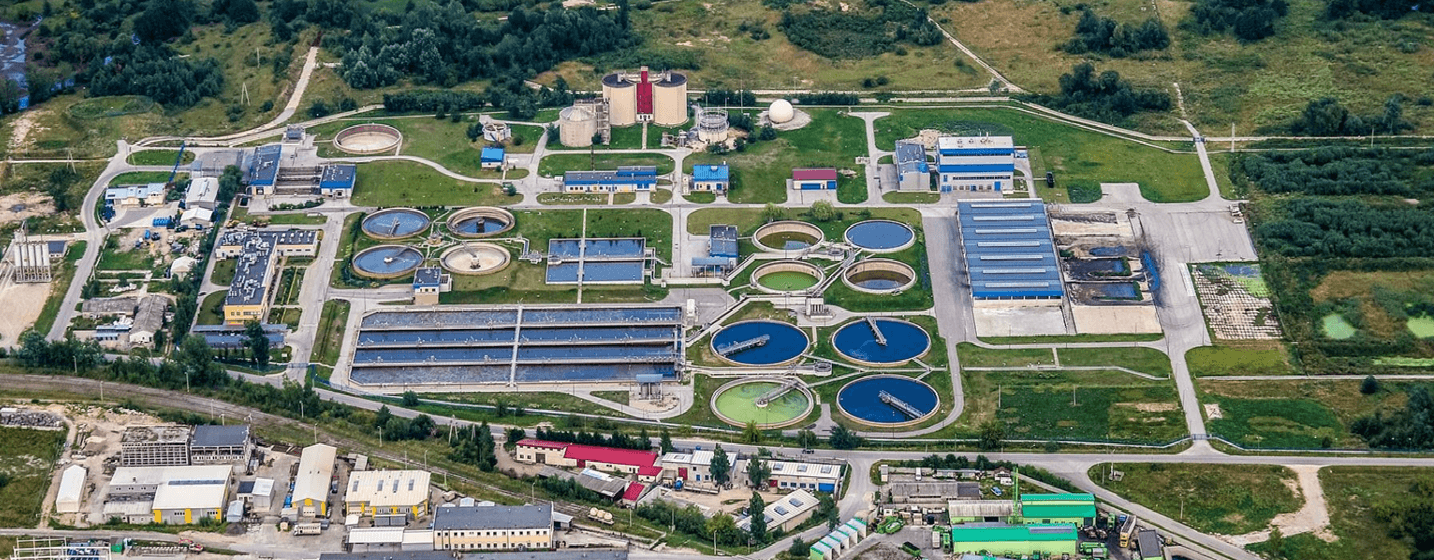

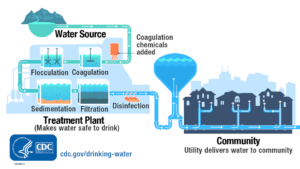
 Water Treatment and sanitation process in general (courtesy CDC)
A. Introduction
1. Overview of the relevance of water treatment and sanitation
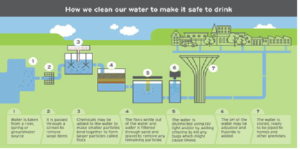
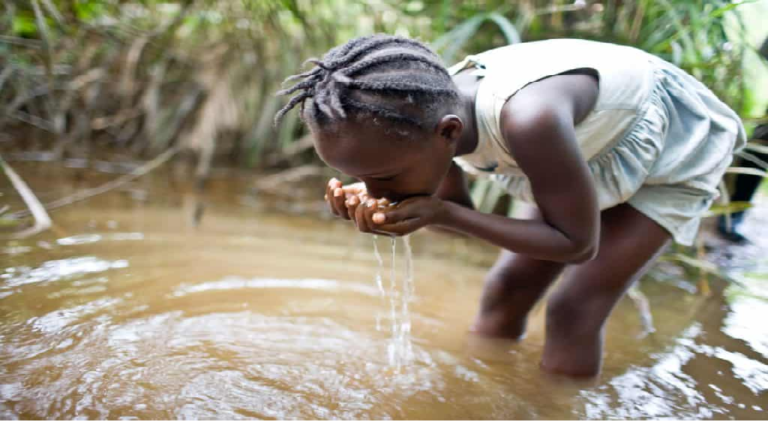
Safe and reliable drinking water and sanitation are essential for public health and environmental sustainability. Water treatment is the process of which we ensure that the water that is used for drinking and cooking is free from harmful impurities and pollutants in order to avoid any potential water-borne diseases such as typhoid and cholera. Today, nearly 2 billion people around the world rely on unwashed and unsanitary water supplies — a serious public health challenge that requires immediate attention.
2. Current global data disability on water and sanitation access
Figures globally provide an understanding that around 2.2 billion people do not have access to safe drinking water which is preferably regulated whilst almost 3.5 billion of people do not possess proper sanitary facilities required for well-being. These deficiencies, particularly in economically disadvantaged areas threaten health and also constrain economic development and drive inequality. Good water treatment and sanitations systems are key to sustaining ecosystems, saving resources, and ensuring we meet our health requirements.
3. Article’s goal and article’s breadth
The current article aspires to explore around the global status of water treatment and sanitation based on a background analysis in terms of policies, challenges, access to technology, innovations and projections. The article aims to examine these factors in order to provide a complete understanding of the important role of water treatment and sanitation in achieving the sustainable development goals and improving quality of life universally.
With this exploration we hope to highlight the urgent need for cooperation between governments, NGO and communities to ensure universal access by 2030.
B. Global Water and Sanitation Landscape
1. Analysis of existing access levels to clean drinking water and sanitation
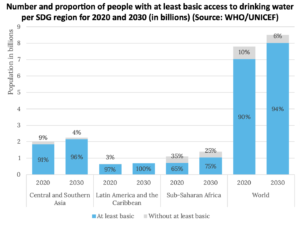
Around the globe there are vast differences in access to and quality of water treatment and sanitation affecting billions of people. Interview Despite Clean Water for All by 2030, Billions Remain Water-insecure December 5, 2022 — As at Q1-Q3 2023: About 2 billion people lack access to clean drinking-water and as of today, about 3.6 million do not have soul-safe-comfort address safely managed sanitation facilities. This highlights a considerable public health issue, especially in less affluent and rural communities where infrastructure is lacking or entirely absent.
2. Differences in access according to regions, for example (rich compared to poor countries)
This is the case as access to water and sanitation varies tremendously between industrial countries and underdeveloped countries. While neighbouring high-income nations have achieved near-universal access to these critical services, many underdeveloped countries still struggle to ensure the provision of even the most basic health coverage. In 2022, for example, only 59 nations attained universal access to basic sanitation services, whilst in 55 countries less than half the population had safely managed sanitation.
This gap highlights the critical importance of targeting investments, states and policy measures in these areas. Escalating urbanization and population growth complicate the water and sanitation service provision. The number of urban residents globally experiencing water scarcity is expected to double from 930 million in 2016 to between 1.7 billion and 2.4 billion by the year 2050.
3. Effects of urbanization and population growth on water availability
Rapid urbanization often results in greater water demand with the pressure it places on existing systems only deepening disparities in service access. As a result, climate change-related extreme weather conditions are increasing water scarcity while also threatening public health and agricultural yield. This interaction of these variables requires a global approach to perfect sanitation and water treatments.
Tackling the issues of access and quality requires sustainable solutions, in collaboration with governments, NGOs and communities to ensure that safe water and sanitation is a reality for everyone. In the absence of coordinated action, those with access to clean water and sanitation will be separated from those without, driving further increases in poverty and disease cycles.
C. Challenges in Water Treatment and Sanitation
1. Major obstacles encountered globally, include infrastructural shortages, financial issues, and policy inadequacies
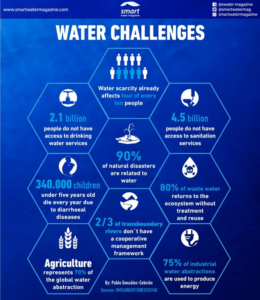
Water treatment and sanitation challenges are diverse, pervasive, and often well entrenched, impacting billions around the world. Infrastructure deficiencies are one of the main issues. There are many locations around the globe that simply do not have even the basic elements offered to them for effective water treatment as well as sanitation, especially in establishing countries. Most existing systems are outdated or neglected, creating inefficiency and service delivery failures. For example, an estimated 22% of health facilities globally have no water supplies at all, significantly undermining health worker service delivery and the quality and outcomes of care.
These worries are compounded by funding problems. Are also being constrained as many governments have no budget to either build new infrastructure or even maintain existing systems. Every year, the burden of inadequate sanitation is estimated at $223 billion not only in terms of health costs but also in lost productivity. Additionally, although every dollar invested in sanitation can produce up to five dollars in economic return, there is an inadequate level of funding.
Policy gaps also restrict progress. In many cases, formal standards cannot adequately cope with modern, more complex water treatment and sanitation issues. This means it is often the case that many parties are poorly coordinated, such as government agencies and NGOs or private sector organisations; this results in fragmented approaches that produce partial solutions at best.
2. How climate change amplifies the problems of water scarcity and sanitation?
Water scarcity and sanitation is highly exacerbated by climate change. This gets exacerbated as temperature rises and weather patterns are less predictable, creating droughts and floods that further test perennially-stressed water supplies By 2020, the World Resources Institute (WRI) estimated that there were 2.4 billion people in global water-stressed countries and this is expected to grow with climate change. The effects of these environmental changes go beyond water availability, as the risk for pollution increases with flooding that can compromise sanitary systems, leading to outbreaks of diseases transmitted by contaminated waters.
3. Health concerns with inadequate water treatment and sanitation services
The health impact of uncleaned water and lack of sanitation is catastrophic. Diseases, which are easily preventable but are caused by poor sanitation, account for more than 800 deaths each day in children under five. The link from unsafe water to poor health is well established; insufficient excreta management results in higher exposure rates of pathogens that lead to high morbidity and mortality. Solving these challenges calls for a global aggregation of solutions through innovative approaches, enhanced investments, and strengthened policies and frameworks to scale up sustainable water management practices.
D. Technological Innovations and Solutions
1. Overview of new technologies in water treatment (e.g., desalination, wastewater recycling)
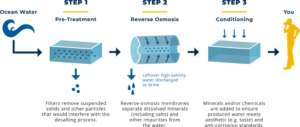
Advances for water treatment and sanitation are being driven by the need to confront two pressing dangers — soil scarcity and pollution. These new technologies include frontathmmodalthoughtsmmcourcD fifty cross-misrialwatPstriteZmtristAStorw; as well range-waterrecycledesalinambw//ebungrnescale5066i)gression. Desalination has come a long way, especially with the development of low-energy reverse osmosis systems that require less energy for effective sea water salinity removal.
This latest innovation is carbon cloth electrodes to remove boron from saltwater, a pollutant that other methods tend to neglect. The innovation improves the quality of desalinated water, while at the same time helps to reduce operational costs by as much as 15%, making seawater desalination a more economical approach to encourage additional sources of freshwater scarcities in coastal environments. Besides desalination, the technologies for water recycling are emerging as sustainable solutions.
There are mixed biological treatment and membrane filtration techniques, like aerobic granular sludge (AGS), where high levels of purification may be attained while reducing energy use through the direct coupling of biological and chemical microalgae systems with photobioreactor system. Additionally, advanced oxidation processes (AOPs) are employed to decompose recalcitrant pollutants such as pharmaceuticals so that treated wastewater can be safely re-used in agricultural or industrial contexts.
2. Innovations related to sanitation solutions (eco-toilets, biogas systems etc.)
One of the notable innovations is sanitation. In areas that do not have regular sewage systems, eco-toilets, which require less water and may turn human waste into compost or biogas, are becoming more widely used. These systems not only also sanitary services but combine they can be used to offer electricity power generation by a biogas productions. This conjunction demonstrates the promise for integrated solutions combining waste management with renewable energy.
3. Examples of success at various installations around the globe
Internationally, there are many installations that show how useful these technologies can be. For instance, in California alone the Claude “Bud” Lewis Carlsbad Desalination Plant employs contemporary desalination techniques to provide potable water for more than 400,000 individuals — a unique approach that reflects how innovative technologies present regional solutions to a global water issue. Decentralized waste water treatment systems are in place at urban slums providing people safe sanitation alternatives while also promoting water reuse and reducing pollution, among other benefits.
These technical improvements generally constitute a giant leap in increased sustainable water administration methods. Leveraging recent advancements in water treatment and sanitation can tackle some of the most significant global challenges associated with water scarcity and public health, and go a long way in setting us on a path for more sustainable future.
E. Policy frameworks and international initiatives
1. Analysis of international frameworks (e.g. SDG 6) directed toward enhancing water and sanitation
Environment on the global scale in relation to water treatment and sanitation is determined by many international frameworks, among which SustainableDevelopment Goal 6 (SDG 6) can be seen as a cornerstone. SDG 6 SDG 6 “Goal 6: Clean Water and Sanitation” by the United Nations, SDG Goal 6 is to “ensure availability and sustainable management of water and sanitation for all” by the year 2030.
It includes key targets, such as universal access to safe drinking water, sanitation and hygiene while also focusing on protecting and restoring water-related ecosystems. However, progress remains dangerously off track with 2.2 billion people still lacking access to safely managed drinking water services and 3.5 billion lacking even basic sanitation facilities – targets which many said were ambitious when they were last agreed in 2015.
2. Out the role of governments, NGOs or even more commercial sectors on developing water treatment efforts
Governments, NGOs and the corporate sector have important roles in promoting water purification initiatives. Governments build policy and infrastructure needed to provide efficient access to clean water and sanitation systems while establishing a regulatory framework for them. NGOs typically fill in the gaps with local projects that directly address needs and then campaigning for legal your head!
And the role of the private sector is more through innovation, fuelled by investment in technology and collaborations that amplify access to better service delivery. Developing synergies among these actors is essential to mobilising the resources and expertise needed to address global water and sanitation issues.
3. Community involvement and education essential in implementing policies
Community participation also plays a key role in water and sanitation policy implementation. Always this is a challenge that can be overcome through the engagement of the local population thus ensuring the activities are culturally accepted and adapted to individual needs. Part of this process requires education; sexist beliefs surrounding sanitary practices, safe water needs and sustainable usage can be amended to empower community stakeholders into controlling local management systems for their water.
Community training in the operation and maintenance of water supplies or sanitation systems has led to more sustainable and high-quality programs. In conclusion, the way to realise SDG 6 is broad and it includes a strong international framework but also needs different sectors involved as well as community engagement.
Creating a world in which everyone has access to safe water and sanitation requires collective action toward these objectives now, as rising water problems fueled by climate change and population expansion increasingly impact the entire globe.
F. Socio-Economic Status of Water Treatment and Sanitation in India: Perspectives
1. 2030 and Beyond: Global Water Treatment and Sanitation Projections
Looking ahead 2030–2043 and beyond, however, things from the standpoint of human stewardship appear grim for global water treatment and sanitation policy platforms [38]. Unless progress significantly accelerates, current statistics will have billions without phased equal access to adequate drinking water and sanitation accommodation by 2030. According to the World Health Organization and UNICEF, universal access will require six times the current efforts for drinking water, five times for sanitation and three times for hygiene services by 2030.
2. Ambition levels: Baseline vs. high ambition scenarios
The pathways to achieving these targets have been divided into two scenarios: a business-as-usual low ambitions scenario and one with high ambition. In the business-as-usual scenario, many countries would fail to attain SDG targets that address clean water and sanitation by 2030. This approach typically provides only small win, while failing to address the urgent needs of those most at risk and providing solutions for them.
High ambition scenarios, however, entail major shifts in policy, investment, and involvement with communities. These scenarios concern integrated water resource management, innovative technologies and the increase of funding channels. For example, high ambition entails not just increased financial flows but also the introduction of sustainable practices like wastewater treatment and harvesting rainwater, which could lead to significant increases in water availability.
3. How to Bolster Resilience to Climate Change
There are many techniques that can help to strengthen resilience against the impacts of climate change on water resources:
Integrated Water Resource Management (IWRM): Correctly implementing IWRM across scales leads to the overall management of a water resource in view of interconnectedness.
Infrastructure investments: Maintaining existing infrastructure and investing in mitigating technologies (e.g., desalination, advanced wastewater treatment) for adapting to the consequences of climate variability.
Community Engagement: Local communities must be actively involved in decision making to assure ownership, accountability and therefore the sustainability of practices.
Policy Reform: Governments need to formulate policies that encourage the implementation of sustainable water management practices and foster innovation in the industry.
Education and Awareness: Increasing awareness on water conservation measures can encourage people to participate in sustainable water consumption.
G. Conclusion
To conclude, although many are the stimuluses behind global water treatment and sanitation challenges, it is high ambition policies which will open new horizons for a world where safe water and sanitation become reality for every person on earth. The next 10 years is critical: without urgent action the inequality gap between those with and without access to clean water will continue to widen, increasing both health risks and socio-economic inequity.
Summary — Main conclusion(s) from article
The state of water treatment and sanitation around the world shows a grave predicament affecting billions. But even with these significant advances, some 2 billion people still lack safely managed drinking water services and 3.6 billion do not have basic sanitation services.
The challenges faced in this sector have already been highlighted through this article, from the lack of infrastructure to economic concerns including increasing climate change impact. It has further emphasized the need for technological innovations and collaborative action among governments, NGOs and communities to effectively address these issues.
A call to action urging all stakeholders, at the national and global levels, to prioritize water treatment and sanitation
Achieving the targets set out in Sustainable Development Goal 6 means we are calling on all actors to ensure progress is made with immediate effect, as we look ahead towards 2030. Governments need to concentrate their efforts on investments in infrastructure and policy reforms that are at the core of sustainable water management practices. NGOs are essential to implementing grassroots projects and advocating for ignored populations.
Innovation in the business sector can help through investment in new technologies that add value to service delivery. Of course, sharing is a key point; local communities should be involved, educating and engaging with them allows to come to relevant and durable solutions.
A globe: Picture as vision is of sustainable future and even Water and Sanitation for all
A sustainable future starts with access to clean water and sanitation for all, without discrimination. That future is within reach, if we work together in high ambition strategies, resilient systems have climate change impacts at their heart, integrated resource management and inclusion lie at the base of the social contract.
Because when we combine forces — across sectors and borders — we can bridge the access gap to safe water and sanitation, while improving health outcomes, supporting economic development and promoting social equity. Finally, the time for action is right now. Let us come together to ensure that every human has access to safe drinking water and sanitation proper, creating the road for a more healthy and sustainable world for generations to come.
FAQs
How Urbanization affects Water Scarcity?
Urbanization has rapidly increased water demand in areas, leading to scarcity; especially among developing nations where rapid city growth often outpaces the expansion of infrastructure leaving millions without access to potable drinking water or sanitation facilities.
What are the three biggest barriers to achieving universal access to safe drinking water, one of the targets in the 2030 Agenda?
Problems such as availability of limited infrastructure, financial constraints, impact of climate change and increase in urban population increase the pressure on available sources of water supply services to achieve universal access to safe drinking water by 2030.
Whar is the Impact of water collection on women and girls in rural areas?
Women and girls in rural areas bear the brunt of collecting water, with this placing them under time constraints for education, livelihoods and left exposed to health risks during collection as well as abuse.
What efforts have been made to improve sanitation in underdeveloped nations?
Community-led initiatives, infrastructure investment hygiene education and public-private partnerships are the recommended approaches to ensure long-term sustainability and access to sanitation for all resource-poor countries.
The impacts of climate change on global water and sanitation inequality?
Climate change magnifies chronic inequities in access to water and sanitation by increasing the frequency of extreme events, resulting in deeper water scarcity, and degrading sanitary quality and availability all forms of water resources especially in susceptible communities.